Is Artificial Intelligence Leading to Ossification of Human General Intelligence?
We built machines to extend our minds. The quiet risk is that in leaning on them, we let the muscles they were meant to assist quietly wither.
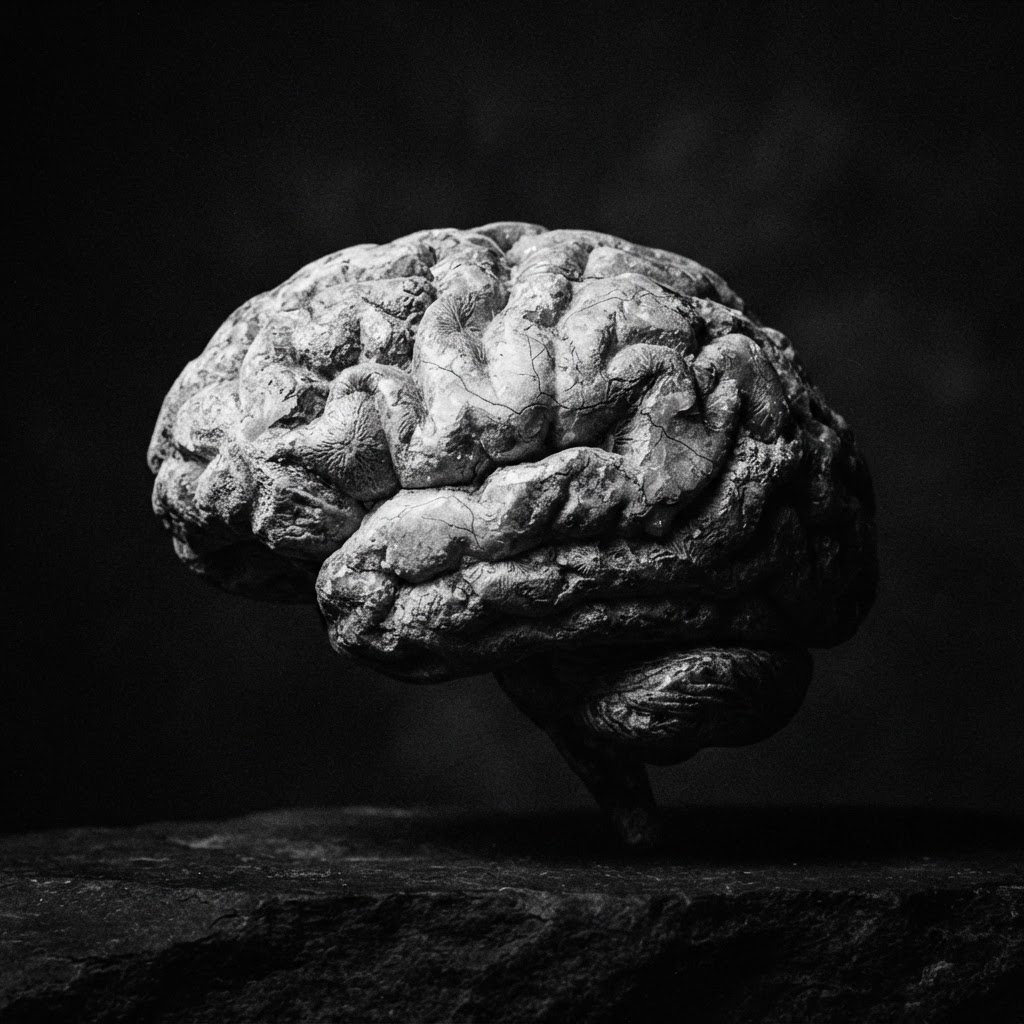
Ossification is a strange word to use about intelligence. It belongs to biology — the process by which soft, adaptable cartilage hardens into fixed bone. It is what gives a body its structure, and also what ends its capacity to grow. After more than two decades spent watching technology reshape how professionals think, I have begun to wonder whether it is the right word for what artificial intelligence is doing to us: not making us less intelligent, exactly, but making our intelligence more rigid, more dependent on scaffolding we no longer build ourselves.
The optimistic story is well rehearsed, and I have told it myself. Every tool that offloads cognitive labor frees us to think at a higher level. The calculator did not make us worse at mathematics; it let us stop spending attention on arithmetic and spend it on the problems that matter. By this account, AI is simply the next rung — a way to delegate the tedious so we can ascend to the profound. I want to believe it. I am no longer sure the analogy holds.
The difference between a tool and a crutch
A calculator automates a step. A large language model automates the reasoning around the step — the framing of the question, the weighing of options, the first draft of a judgment. That is a categorically different kind of delegation. When we hand over the arithmetic, we keep the thinking. When we hand over the thinking, we keep only the review — and reviewing is a skill that quietly atrophies without the practice of producing.
A muscle that is always supported never has to bear weight. It does not grow stronger in comfort — it grows accustomed to being held.
I saw a version of this long before the current wave of AI. When enterprise software moved to the cloud, an entire generation of consultants entered the profession one layer of abstraction up — fluent in the application, innocent of the data science beneath it. Many were brilliant, hard-working people. What they lacked was not information; it was context — the earned, uncomfortable understanding of why the system behaves the way it does. That understanding is not delivered. It is accumulated through friction, through the slow work of getting things wrong and feeling exactly why. Remove the friction and you remove the mechanism by which judgment forms at all.
General intelligence is a practice, not a possession
We speak of human general intelligence as though it were a fixed endowment, a quantity we either have or lack. But the general part — the ability to carry reasoning from one domain into another, to sense an analogy, to improvise where no template exists — is not a possession. It is a practice, sustained by constant exercise across unfamiliar terrain. It is precisely the faculty AI is most eager to perform on our behalf, and therefore precisely the one most at risk of going quiet.
The danger is not a sudden collapse. It is a gradual narrowing. A generation that never has to sit with an unstructured problem, never has to build an argument from nothing, never has to be wrong in a way that costs something, may become extraordinarily fluent at directing intelligence without ever developing much of its own. Fluent at prompting. Ossified at thinking.
The way through is not abstinence
I am not arguing that we should refuse these tools; that ship has sailed, and refusal is its own kind of foolishness. I am arguing that we should be deliberate about which frictions we keep. There is a version of this future where AI absorbs the routine and we reserve our own minds for the genuinely hard, the genuinely novel, the genuinely uncertain — and are sharper for it. There is another where we surrender the hard problems too, because the machine offers a plausible answer and plausibility is easier than struggle.
I lean, as I usually do, toward the optimistic reading — but only if we choose it on purpose. The valor of an idea has never been in how effortlessly it arrived; it has been in the willingness to earn it. If artificial intelligence is going to extend human general intelligence rather than ossify it, the deciding factor will not be the technology. It will be whether we still choose to do some of the thinking ourselves.
Written by
Vatsal Gaonkar
Finance & AI Transformation Advisor · Oracle ACE Director
Vatsal Gaonkar is a Finance & AI Transformation leader with more than two decades spent aligning people, process, and technology. An Oracle ACE Director and advisor to C-suite executives, he writes about Autonomous Finance, agentic AI, and what he calls Abundance-Based Leadership and the Infinite Improvement mindset — treating innovation as a journey rather than a destination.
Connect on LinkedInKeep reading Volantis
New essays straight to your inbox. No noise, no ads — just the argument.